
Gurinder Chadha: Southall Kitchens and What's Cooking?
Gurinder Chadha refused to cook as a girl and later opened Sundance with What's Cooking? Her path to Bend It Like Beckham, per her biography.
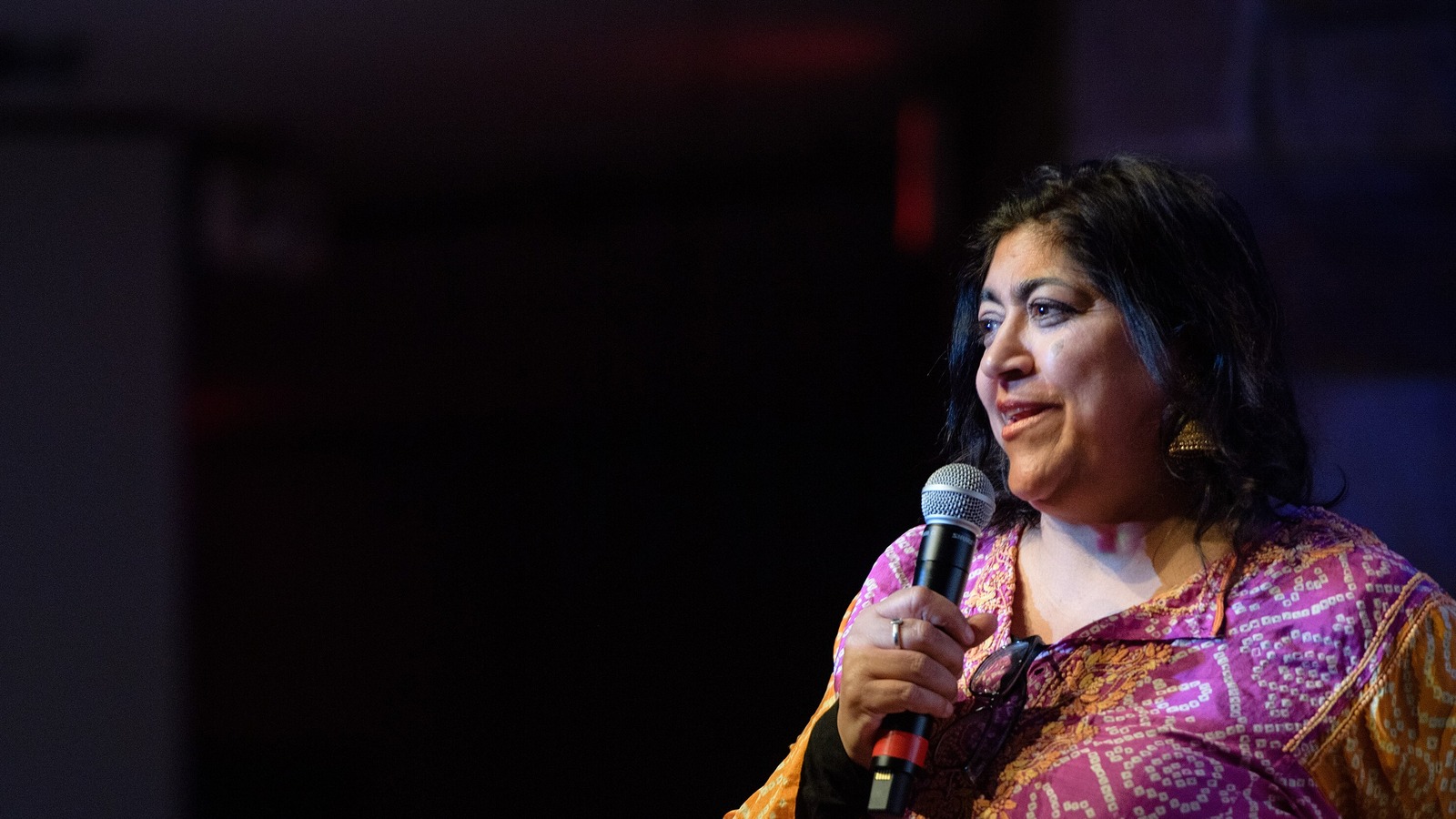
Gurinder Chadha's best-known film is about football, but food and kitchens run through her story. Her Wikipedia biography records a girl in Southall who would not cook, and a director who later opened Sundance with a film called What's Cooking? This piece follows that record and keeps to what it says.
From Nairobi to Southall
According to the biography, Chadha was born on 10 January 1960 in Nairobi, Kenya, then a British colony, to a Punjabi Sikh family that belonged to the Indian diaspora in East Africa. Her family held "united citizenship" under the British Nationality Act 1948. Her father moved first, and the family joined him the following year in Southall, West London, when she was two. Her father had worked as a clerical officer at Barclays Bank in Kenya but could not get the same job in Britain, and the biography says he faced prejudice because he wore a turban and beard. The family eventually opened a shop.
The biography says she refused to cook for her family. In her mind, women in the kitchen while the men sat and ate was oppressive, so she sat at the table with the men and was "extremely outspoken". She studied politics and developmental economics at the University of East Anglia, and in 1984-85 did postgraduate study at the London College of Printing.
Radio, news and documentaries
She began in radio in the mid-1980s and became a BBC Television news reporter. She directed documentaries for the British Film Institute, the BBC and Channel Four, including I'm British but... (1989), which followed young British Asians. She insisted that the premiere be held at the Southall Community Centre. In 1990 she set up Umbi Films despite having no formal film training. Her first film, the 11-minute Nice Arrangement (1991), about a British Asian wedding, was selected for the Cannes Film Festival's Critics' section.
Features
Bhaji on the Beach (1993) was the first full-length feature made by a British Asian woman, and won numerous international awards. Rich Deceiver (1995), a two-part BBC drama, drew 11 million viewers.
What's Cooking? (2000) was the Opening Night Film of the 2000 Sundance Film Festival and the first British script invited to the Sundance Institute's Writer's Lab. It shared the joint audience award at the New York Film Critics' 2000 season with Billy Elliot, and she won Best British Director at the London Film Critics' Circle Awards.
Bend It Like Beckham and beyond
Bend It Like Beckham (2002) was, before Slumdog Millionaire, the highest-grossing British-financed, British-distributed film ever at the UK box office. It topped charts in the US and Australia and was nominated for a Golden Globe and a BAFTA. The biography quotes Tony Blair writing to her: "We loved it, loved it, because this is my Britain." She staged a musical version in London's West End in 2015. Bride and Prejudice (2004) was the first film to open at Number One in both the UK and India on the same day. Later work includes Angus, Thongs and Perfect Snogging (2008), Viceroy's House (2017), Blinded by the Light (2019) and the ITV series Beecham House (2019). The biography says her award-winning films have earned over 300 million dollars at the international box office.
Honours and projects that stalled
She received an O.B.E. in 2006 and several honorary doctorates. In 2006 she took part in Who Do You Think You Are?, tracing her family from Kenya back to Punjab. She left a planned film adaptation of Dallas in 2007, and a Netflix animated adaptation of Pashmina was cancelled in 2022.
Caveat
The biography does not describe her cooking, her family's shop or What's Cooking? beyond the facts above, so the food angle here is narrow. The domestic details about her youth come from her own accounts.
Sources
*Cover photo: Montclair Film, Wikimedia Commons (CC BY 2.0).*