
Mira Nair: A Filmmaker's Homes in Many Cities
Mira Nair has lived in Rourkela, Delhi, Harvard, New York, Kampala and Cape Town. Her homes and films, per her biography.
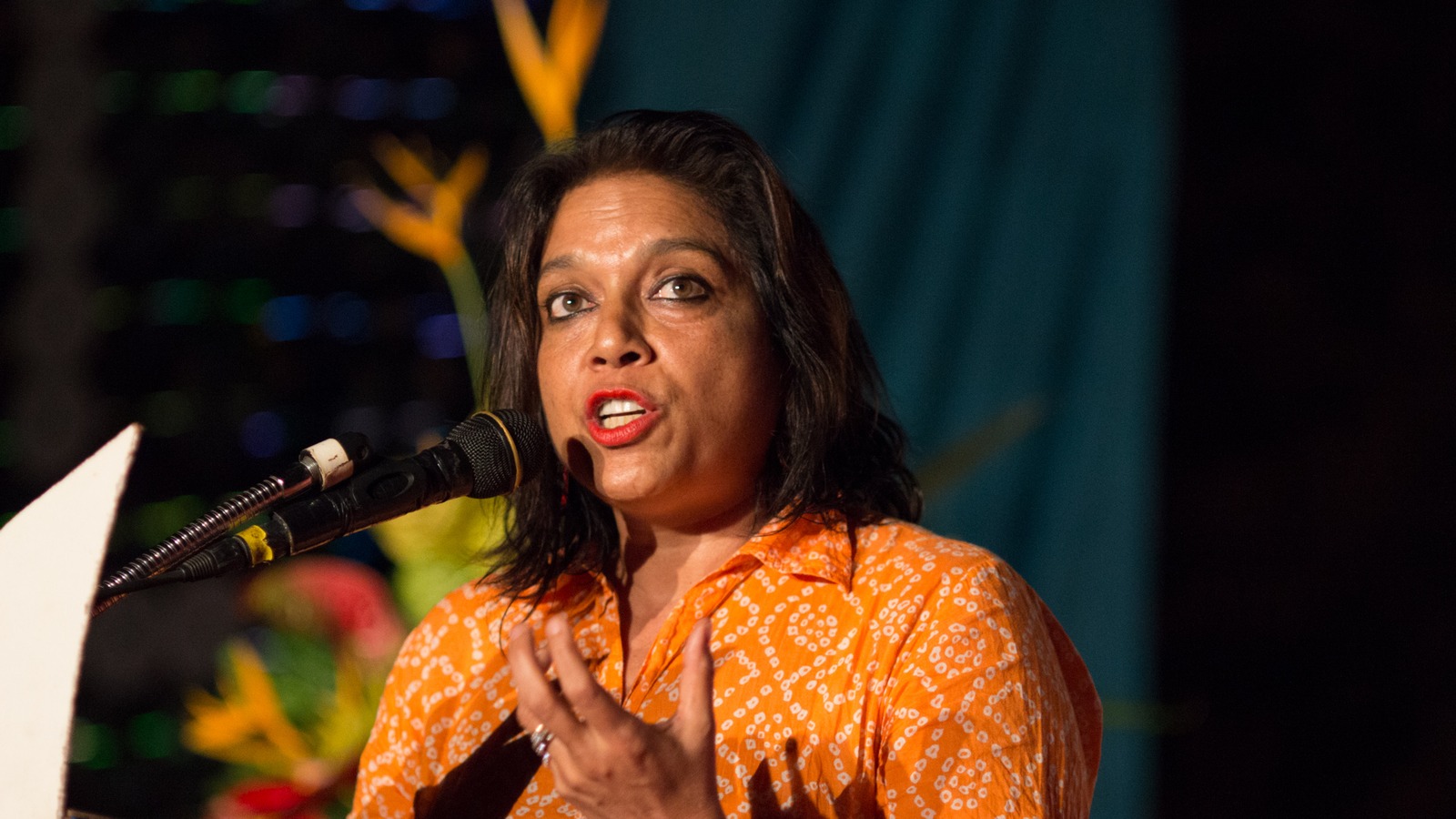
Mira Nair has lived in at least six cities on three continents, and her Wikipedia biography ties most of her films to a place she lived or researched. This piece follows that map of homes, from a colonial-style bungalow in Odisha to Kampala and New York.
A bungalow in Rourkela
According to the biography, Nair was born on 15 October 1957 in Rourkela, in Orissa, to the social worker Praveen Nair and the Indian Administrative Service officer Amrit Lal Nair. She grew up in a "colonial-style bungalow, with [a] spacious veranda and terracotta-tiled floor". She attended Ispat English Medium School in Rourkela until the age of ten, and the family then moved to Bhubaneswar, where she lived until 18. She was at Loreto Convent in Shimla from 1971 to 1974, where she developed a fondness for English literature, including Thackeray's Vanity Fair, which she later adapted for the screen. In her teens she taught herself to type and play the sitar, painted, wrote poetry and acted in local theatre.
Delhi and Harvard
She studied sociology at Miranda House, University of Delhi, and acted in an amateur drama company with the director Barry John. She also did political street theatre in Calcutta with the playwright Badal Sircar. She turned down a full scholarship to Cambridge, saying "I had a chip on my shoulder about the Brits", and in 1976, at nineteen, moved to the US to attend Harvard on a scholarship, graduating in 1979. Her friend and later collaborator Sooni Taraporevala was a classmate.
New York and documentaries
After Harvard she moved to New York. D. A. Pennebaker liked her thesis film, Jama Masjid Street Journal, an 18-minute film about the streets of Old Delhi, and helped her get a grant for her next. So Far from India (1982) follows an Indian newspaper dealer living in New York's subways. India Cabaret (1985) opened the first Indian International Film Festival in Hyderabad and was widely criticised, including by her father.
Salaam Bombay! and Mississippi Masala
She researched Salaam Bombay! with Taraporevala in 1987 and sought out real street children to portray the lives of children surviving in the streets. It premiered at the 1988 Cannes Film Festival, won the Caméra d'Or and was nominated for an Academy Award. In 1998 she used its profits to create the Salaam Baalak Trust, which works with street children in India.
Mississippi Masala (1991), about Ugandan-born Indians in Mississippi, began with research in March 1989, her first visit to Africa. She met her second husband, Mahmood Mamdani, in Nairobi. She moved in with him on the campus of Makerere University in Kampala, where he taught, and their son was born in Kampala in 1991. In 1996 the family moved to Cape Town for about three years.
Later films
Monsoon Wedding (2001) was filmed in only 30 days, with a small crew that included her acquaintances and relatives, and grossed over 30 million dollars. It made her the first woman to win the Golden Lion at the Venice Film Festival. She went on to direct Vanity Fair (2004), The Namesake (2006), The Reluctant Fundamentalist (2012) and Queen of Katwe (2016). She turned down Harry Potter and the Order of the Phoenix to make The Namesake.
Maisha
In 2005 she set up the Maisha Film Lab in Kampala, a nonprofit that trains young East African directors, with the motto "If we don't tell our stories, no one else will". As of 2015 she lived in New York City and taught at Columbia University.
A note on sources
The biography draws heavily on interviews and memoir-style accounts of her family. This article leaves out most of the sections on her parents and marriages, and uses the homes only as a way to organise her films.
Sources
*Cover photo: ZIFFphoto, Wikimedia Commons (CC BY 2.0).*