
Gulzar: The Garage Painter Who Became a Poet
Gulzar arrived in Bombay after Partition and worked in a garage before films. His path to lyrics, directing and the Jnanpith.
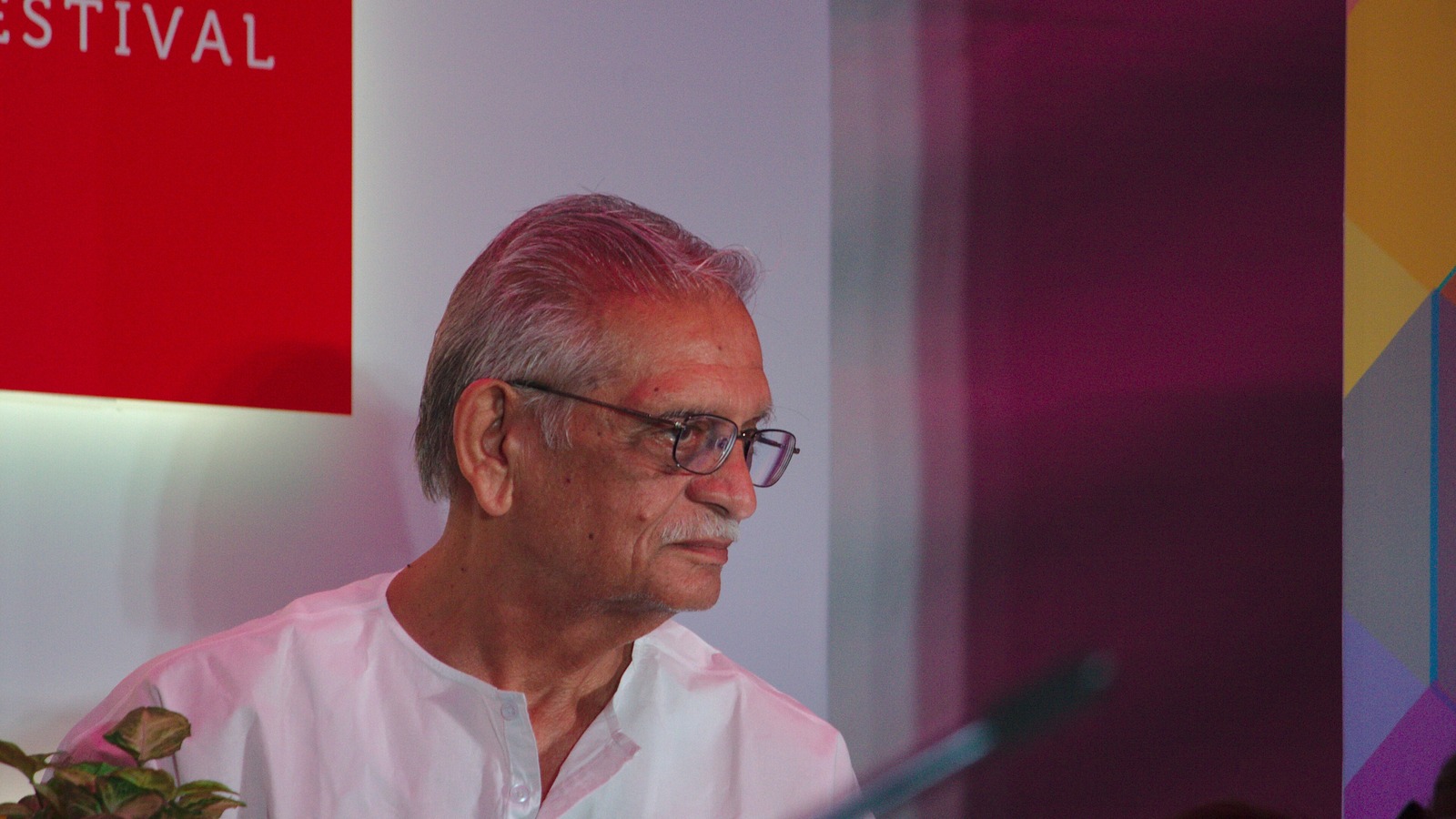
Mumbai has given many arrivals their start, but few began in a garage mixing paint for dented cars. Gulzar, born Sampooran Singh Kalra, is now one of the most decorated writers in Hindi cinema. This piece uses his Wikipedia biography to trace how a city job led to lyrics, films and some of India's highest literary honours.
A split family and a city of small jobs
According to the biography, Gulzar was born on 18 August 1934 in Dina, in the Jhelum District of British India, now in Pakistan. At school he read translations of Tagore, which he recounted as one of the turning points of his life. Partition split his family, and he had to stop studying and move to Bombay, as it was then called, to support them.
He took small jobs. One was at Vichare Motors on Bellasis Road, where he touched up accident-damaged cars by mixing paint shades. "I had a knack for colours," he says. In an interview with Rajya Sabha TV he recalled enjoying the work because it left him time to read, write, attend college and take part in the Progressive Writers Association. His father initially rebuked him for wanting to be a writer. He took the pen name Gulzar Deenvi, and later simply Gulzar.
From writers' meetings to films
At the PWA's Sunday meetings, Shailendra and Bimal Roy encouraged him to join films. He started under Roy and Hrishikesh Mukherjee. His first song was in Bandini (1963), where Shailendra asked him to write "Mora Gora Ang Layle", sung by Lata Mangeshkar. He wrote lyrics and dialogue for Aashirwad (1968), and his song "Humne Dekhi Hai Un Aankhon Ki Mehekti Khushboo" from Khamoshi (1969) became popular. The prayer "Humko Man Ki Shakti Dena", from Guddi (1971), is still sung in many schools in India.
The author Ganesh Anantharaman, in Bollywood Melodies, calls his lyrics, with their deliberate mixing of the senses, "daringly defiant".
Collaborators
He worked closely with R. D. Burman and also with S. D. Burman, Salil Chowdhury, Madan Mohan, Vishal Bhardwaj and A. R. Rahman, among others. Songs include "Chaiyya Chaiyya" from Dil Se.. (1998), based on a Sufi folk song with lyrics by Bulleh Shah. With Rahman he won the Academy Award for Best Original Song at the 81st Academy Awards for "Jai Ho" from Slumdog Millionaire, and a Grammy Award for Best Song Written for a Motion Picture, Television or Other Visual Media.
As a director
His first film as director was Mere Apne (1971), a remake of Tapan Sinha's Bengali film Apanjan, rated "Above Average" at the box office. He went on to direct Parichay, Koshish, Achanak (1973), inspired by the 1958 Nanavati murder case, and Aandhi and Mausam in the 1970s. In the 1980s he directed the TV series Mirza Ghalib, and in 1993 the film Kirdaar. Sanjeev Kumar won the National Film Award for Best Actor for Koshish, which Gulzar wrote about a deaf-mute couple.
Honours
The biography lists five National Film Awards, 22 Filmfare Awards, an Oscar and a Grammy. He received the Sahitya Akademi Award in Hindi in 2002, the Padma Bhushan in 2004, the Dadasaheb Phalke Award in 2013 and the Jnanpith in 2024, India's highest literary honour. In April 2013 he became Chancellor of Assam University.
Reading the record
The garage story and his father's reaction come from Gulzar's own interviews as relayed in the biography, so they are best taken as his account. The awards, titles and collaborations are the checkable part, and they show a poet who turned a city job into an unusually long film career.
Sources
*Cover photo: Primejyothi, Wikimedia Commons (CC BY-SA 3.0).*